The 29th Congress of the United Nations on Climate Finance will begin without leaders and Trump looms large

The role of Indigenous Peoples in UN climate negotiations: Azerbaijan as a new ambitious goal to increase the global energy storage capacity by 2030 and global energy efficiency by 2030
“To actually unchain ourselves from the colonial nature of the COP itself,” he said. “The COP is predicated on the erasure of Indigenous nationhood. It’s built around the upholding of state nationhood, and as a result, we won’t see significant change until the nationhood of Indigenous peoples is acknowledged and incorporated.”
A representative of the Local Communities and Indigenous Peoples Platform at COP29 says his group will focus on making sure there is no additional harm to Indigenous peoples.
Eriel Deranger is the executive director of Indigenous Climate Action and a First Nation member.
Indigenous people hold a sliver of power at these meetings. They can offer advice to states that are willing to listen to the wishes of Indigenous peoples.
Now Azerbaijan has set a new, ambitious goal for the summit — to increase global energy storage six-fold. When the sun is not shining or the wind is blowing, stored energy can be used to back up renewable energy.
At the COP28 meeting in Dubai last year, countries pledged to triple renewable energy capacity by 2030 and double annual energy efficiency improvements. It was identified by the International Renewable Energy Agency as necessary to achieve a broader climate change goals and avoid some of the worst consequences of burning fossil fuels.
“It is still possible to achieve this goal, but each year the target falls further out of reach,” Francesco La Camera, IRENA’s director-general says. “We made a shared commitment at COP28. It’s time for us to deliver.
The challenge of climate finance: how wealthy countries are investing in LMICs and how to rein in climate change and prepare for the 2030 global climate change summit
But this year the world is investing even more money in exploring for and producing fossil fuels, according to a report from S&P Global Commodity Insights. President-elect Donald Trump has pledged to champion fossil fuels and cut investments in the fight against climate pollution, like solar and wind energy. Trump said he will “terminate” Biden’s signature climate legislation.
The problem is wealthy countries were slow to deliver. In 2022, they finally made good on their promise, providing developing nations with a record $115.9 billion in financing to cut climate pollution and adapt to rising temperatures.
Tracking how much funding wealthy countries are putting towards LMICs is one area that will be discussed at the summit. Transparency is already a challenge because there is no broad agreement about what constitutes ‘climate finance’, says Romain Weikmans, a researcher who studies the issue at the Free University of Brussels in Belgium. “Every country has its own accounting methodology.”
The director for energy and development at TheBreakthrough Institute says that success is when the money is delivered. “What we really want to see is an increase in resources to poor countries that will actually enable them to tackle climate change. These are the statements we are seeing.
The annual meeting is an opportunity for world leaders, as well as scientists, activists and corporate executives, to work on plans to rein in global warming and to prepare communities for its effects. Donald Trumps return to the presidency raises questions about the future of global climate initiatives because the United States is the biggest contributor of greenhouse gas pollution.
Tech-enabled Sustainable Development and the Challenge of Climate Change in the 21st Century: a Keystone for Resilient Transitions
“I remain very optimistic on the technology side,” says Rich Lesser, global chair of Boston Consulting Group. “The challenge is that the timeline to do this is not set by us.”
In 2009, industrialized countries agreed to give $100 billion a year to developing countries to help them fight climate change, and this is the first time this target has been met. Then, in Paris in 2015, countries agreed that a new, larger target should be set for helping developing countries from 2025 onward. And that’s how the NCQG was born.
Every country has to agree on how much planet warming pollution they’ll cut and then update their plans every few years. To reduce the risks of extreme weather disasters, the goal is for global warming to be no higher than 1.5 degrees C, and to be below 2 degrees C.
“President-elect Trump has made very clear that he won’t wait six months to pull out of the Paris agreement like he did in his last term,” says Alden Meyer, senior associate at climate change think tank E3G. “He will pull out on day one.”
The process of withdrawing from NATO takes a year if the US does so. But the threat is already reshaping the diplomatic landscape. At the Baku summit, countries won’t rely on U.S. leadership as they would have if Vice President Kamala Harris had won the election, Meyer says.
“With Trump’s victory, I think people will be looking to see other countries, other leaders pick up the slack,” Meyer says. “Particularly the European Union and China.”
What to Look for in a Meeting of the World’s Largest Environmental Organization (M20COP19) on Climate Change and Climate Finance
Industrialized countries like the United States built their wealth producing and using fossil fuels — and that’s driven most of the planetary warming so far. Developing nations, on the other hand, have contributed far less pollution. Because of their smaller economies, they’re suffering disproportionate harm.
That leaves developing nations in a bind. Whatever money is pledged, it will be a fraction of what is needed. Wealthy neighbors that have been unreliable will be relied on.
At these conferences, held every 12 months, everyone has a microphone—small islands with 10,000 inhabitants sit next to the giant countries of the world as they try to make decisions on how to curb climate change and its impacts.
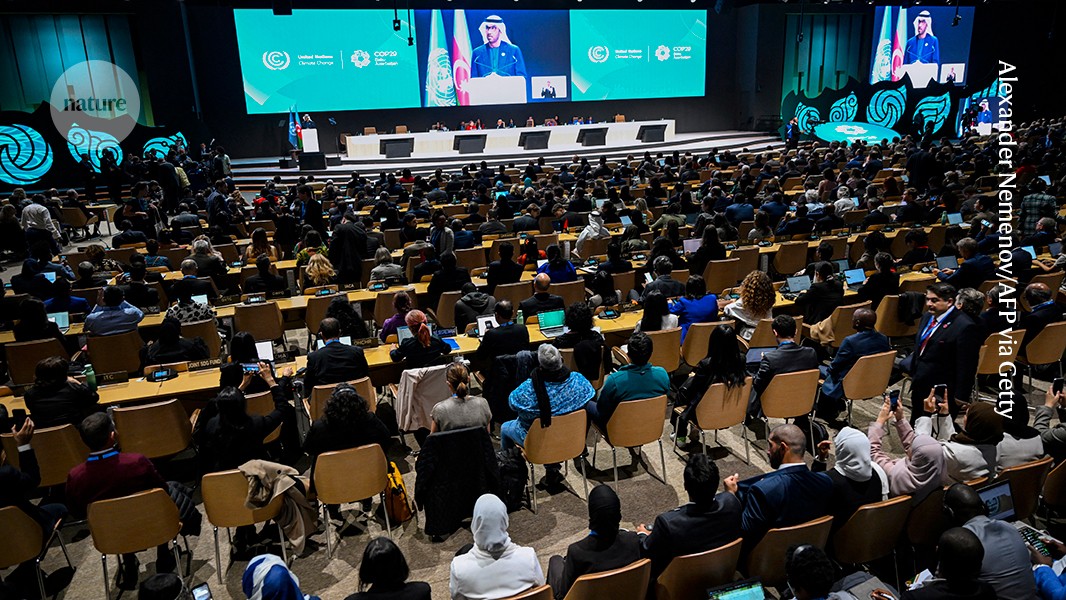
The meeting kicks off today with a plenary, and tomorrow will hear from heads of state and their environment ministers. They will then make way for the negotiators and so-called sherpas: the people who prepare the text of the conference’s decisions.
To avoid stalemate, these final decisions are approved by consensus rather than voted on; approval is obtained in the absence of overt objections, though the decisions’ text may be repeatedly amended in order to reach an agreement. Here’s what to look out for.
Negotiating a strong agreement without the United States — the world’s largest economy and its second-largest greenhouse-gas emitter — will be “very difficult”, says Niklas Höhne, a climate policy expert and co-founder of the NewClimate Institute in Cologne, Germany.
A US exit could also spell more trouble for climate finance, the main theme of the summit in Baku. The United States has already failed to meet its commitment under Biden to boost international aid for developing nations to US$11.4 billion annually, to help them adapt to climate change and forgo industrialization that involves heavy pollution. The US Congress appropriated nothing this year. And few see any prospects of the new administration under Trump, who has questioned the existence of climate change, stepping up.
For instance, Weikmans says, an LMIC might use funds from a wealthy nation to build a new school equipped with solar panels, but it’s unclear whether that wealthy country would report the whole cost of the school, or just the solar panels, as part of a climate investment. The new goal should be formulated in a way that will allow for observers to assess the extent to which it has been met or not.
The world has warmed 1.3 C and some are predicting 1.5 C this year. Scientists are telling policymakers that the climate is changing and that the risks are increasing more quickly than a few years ago.
Extreme heat, flooding, hurricanes of a magnitude we’ve never seen before, and severe weather events are just some of the impacts we’ve seen this year. As the world barrels towards an unlivable future, he adds, leaders at COP29 need to switch to “emergency mode”.